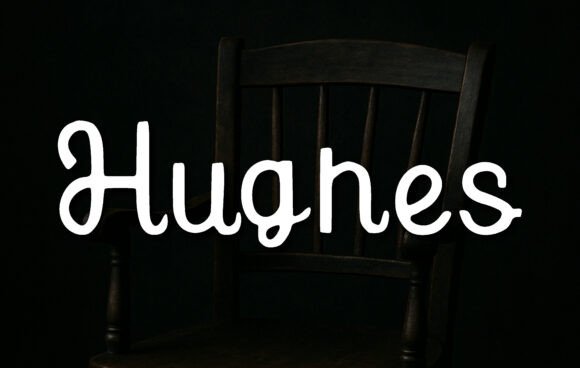
Hughes: The Friendly Script Font for Modern Design
In a digital landscape saturated with sterile sans-serifs and overly ornate scripts, finding a typeface that feels both contemporary and genuinely human can be a challenge. Enter Hughes, a friendly monoline script font that masterfully captures the charm of handwriting with the simplicity of geometric structure. Its even stroke weight, rounded terminals, and slightly playful curves give it an approachable and modern character, making it a standout choice for designers seeking to inject warmth and personality into their work.
The design of Hughes is a study in balance. It blends cursive motion with print-like clarity, resulting in a typeface that is clean yet expressive. This unique combination ensures it remains highly legible while maintaining a handcrafted, bouncy appeal. This balance is critical for effective visual communication, as it allows the font to convey sincerity and accessibility without sacrificing professionalism. It’s a typographic solution that feels human, heartfelt, and perfectly suited for a wide array of creative projects.
Practical Applications Across Design Disciplines
The true strength of Hughes lies in its remarkable versatility. Its friendly demeanor and clear structure make it an asset across numerous design contexts, enhancing both aesthetics and user engagement. Here’s how it can elevate your work:
- Branding and Logo Design: Hughes excels at creating a memorable and approachable brand identity. Its handwritten quality adds a personal touch, perfect for boutique brands, artisanal products, or any business aiming to project a friendly, authentic image. It pairs beautifully with clean sans-serifs for a balanced visual hierarchy in logo systems.
- Marketing and Social Media Graphics: For digital marketing and social media content, Hughes captures attention with its dynamic yet readable forms. It’s ideal for quotes, call-to-action text, and headline overlays on images, ensuring your message feels engaging and personal in a fast-scrolling feed.
- Packaging and Editorial Design: On product packaging, Hughes adds a layer of artisanal quality and warmth. In editorial layouts, it can highlight pull quotes or section headers, breaking up dense text and guiding the reader’s eye with its rhythmic flow.
- Web and UI Design: When used judiciously in web design or UI design—for hero text, buttons, or accent elements—Hughes can soften a digital interface, making it feel more welcoming and improving the overall user experience (UX).
Integrating Hughes into Your Design Workflow
Successfully incorporating a script font like Hughes requires thoughtful consideration. It’s not just about choosing a beautiful typeface; it’s about making it work within your broader design system. Always consider its role in the visual hierarchy. Hughes is typically best used for headlines, short phrases, or emphasis rather than body copy to maintain readability at smaller sizes.
Evaluate its compatibility with your color palette and other typography. Its friendly nature pairs well with neutral, earthy tones or vibrant, cheerful colors. For maximum impact, contrast its flowing lines with a sturdy, geometric sans-serif for body text. Test its scalability—ensure it remains legible and retains its character when scaled up for a poster or down for a mobile screen.
Ultimately, selecting the right creative assets is about more than just visual appeal; it’s about strategic communication. A font like Hughes offers more than just style; it provides a tone of voice. It evokes warmth and personality, making it a powerful tool for designs that aim to connect on a human level. By choosing assets that align with your design goals and audience expectations, you transform good design into great communication, ensuring your visual message is not only seen but felt.