Bakelony: A Delicate Script for Modern Design
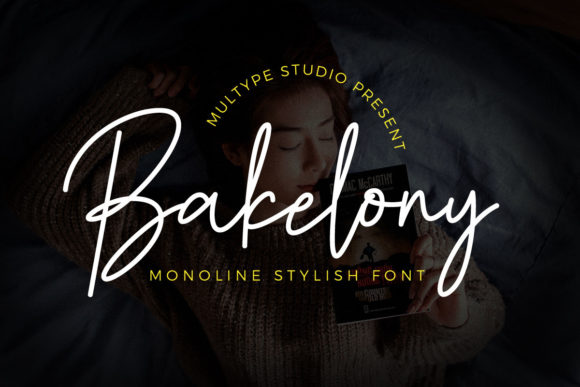
In the crowded landscape of digital typography, finding a font that balances elegance with contemporary flair can feel like a quest for the holy grail. Enter Bakelony, a thin, asymmetrical, and delicate script font that has quietly become a secret weapon for designers seeking to inject sophistication and personality into their projects.
Defined by its smooth, flowing curves and a distinct lack of rigidity, Bakelony moves away from the structured, often predictable forms of traditional script fonts. Its asymmetrical nature gives it an organic, hand-crafted quality that feels both personal and premium. This isn't just another decorative typeface; it's a tool for creating emotional resonance and visual hierarchy. When used thoughtfully, it commands attention without shouting, guiding the viewer's eye with a gentle, confident elegance. For designers working in fashion branding, luxury goods, or editorial design, this font offers a way to communicate exclusivity and artistry instantly.
Practical Applications Across Creative Projects
The true value of a typeface like Bakelony lies in its versatility. Its delicate structure makes it ideal for applications where a touch of refinement is needed without overwhelming the overall design composition. Consider its use in the following contexts:
- Branding and Logo Design: Bakelony excels in creating memorable wordmarks and logos for boutique brands, artists, and high-end services. Its unique letterforms ensure a distinct identity that stands apart from generic sans-serifs.
- Marketing and Social Media Graphics: For Instagram stories, promotional banners, or email headers, this font adds an instant layer of aesthetic appeal, helping to increase user engagement through beautiful visual communication.
- Editorial and Web Design: Used sparingly in headlines, pull quotes, or navigation elements, it can break the monotony of body text, creating a more dynamic and enjoyable reading experience that enhances overall UX design.
- Packaging and Print Design: On product labels, business cards, or invitation suites, the font's thin strokes and curves translate beautifully to physical materials, reinforcing a brand's commitment to quality and detail.
Integrating Bakelony into Your Design Workflow
Adopting a new creative asset requires more than just liking its appearance. To use Bakelony effectively, you must evaluate it against your project's specific goals. Always consider readability, especially at smaller sizes or on complex backgrounds. Its thin nature means it often pairs best with a simple, clean sans-serif for body text to maintain a strong visual hierarchy.
Think about your color palette and composition. A delicate script like this shines when given breathing room. Avoid cluttering the space around it. Let its smooth curves be a focal point. When testing, mock it up in real-world scenarios—on a website header, a social media post, or a product mockup. This practical approach helps you assess its impact on your target audience and ensures it aligns with the modern aesthetic you're striving for. Remember, the goal of any design trend or asset is to solve a communication problem, not just to decorate.
Ultimately, the strength of your creative projects hinges on the intentional selection of every element. Typography is the voice of your design, and choosing a font like Bakelony is a deliberate decision to speak in a tone of refined confidence. By investing in high-quality, purposeful creative assets, you do more than just beautify your work; you build a coherent brand identity, improve user experience, and craft a professional presentation that resonates deeply. In a world saturated with content, these thoughtful choices are what make a design truly memorable and effective.