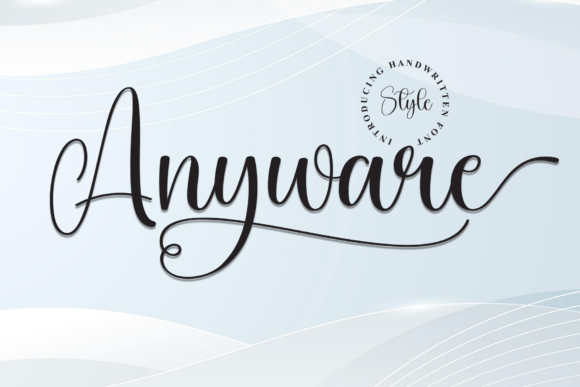
Anyware: Elevating Design with Authentic Handwritten Fonts
In a digital landscape saturated with clean lines and sterile vectors, the human touch has become a powerful differentiator. The Anyware script handwritten font brings a personal, stylish touch to your designs with its fluid strokes and natural flow, perfectly mimicking the charm of real handwriting. This isn't just another typeface; it's a tool for creating authentic emotional connections in your visual communication.
The Strategic Value of Handwritten Typography
Typography is a cornerstone of graphic design, directly influencing readability, mood, and brand perception. While sans-serifs and serifs convey professionalism and tradition, a script font like Anyware introduces warmth, approachability, and personality. Its value lies in its ability to break visual monotony and guide the viewer's eye with an organic rhythm that rigid fonts cannot replicate. This makes it a strategic asset for designers looking to craft more engaging and memorable brand identities.
Practical Applications Across Creative Projects
The versatility of a quality handwritten font is vast. Its application extends far beyond simple greeting cards, serving key functions across multiple design disciplines:
- Branding and Logo Design: Use Anyware for logotypes, taglines, or brand marks to inject personality, especially for boutique businesses, artisan products, or lifestyle brands seeking a crafted aesthetic.
- Marketing Materials: Headlines on flyers, brochure call-outs, or email newsletter accents benefit from its attention-grabbing, personal feel.
- Social Media Graphics: Create standout quotes, story text overlays, or post headers that feel authentic and scroll-stopping in a feed dominated by generic text.
- Web and UI Design: Sparingly use it for hero section quotes, testimonial highlights, or button labels to add a touch of elegance and break the grid.
- Packaging and Editorial Design: It adds a handcrafted label feel to products or a personal narrative voice to magazine layouts and book titles.
Integrating Anyware Effectively: Key Considerations
Deploying a script font effectively requires thoughtful application. To maintain professionalism and clarity, consider these design workflow tips:
- Prioritize Readability: Use Anyware primarily for display text—headlines, logos, or short phrases. Avoid it for long body copy where legibility at small sizes is critical. Always test across devices and backgrounds.
- Maintain Visual Hierarchy: Pair it with a simple, neutral sans-serif or serif font for supporting text. This contrast creates a clear hierarchy, letting the handwritten element shine without overwhelming the design.
- Ensure Consistency: Select one or two complementary weights or styles from the font family and use them consistently across all materials to strengthen brand identity.
- Context is Key: Match the font's style to your audience and message. Its fluid, elegant strokes are perfect for wedding invitations or luxury branding, while a more casual, rounded script might suit cozy café branding or children's products.
Ultimately, the power of a creative asset like Anyware lies in its ability to communicate beyond words. It conveys thoughtfulness, creativity, and a human-centric approach. By selecting typography that aligns with your design goals and audience expectations, you transform functional communication into a compelling visual experience. Quality assets are not just decorative; they are foundational to building a cohesive, professional, and resonant visual language that elevates every project they touch.